
Insurance Premium Calculator: How It Works and How to Use One Wisely
Try buying insurance in India these days and at some point you’ll end up on a calculator page — type in your age, pick a coverage amount, and wait for a number to appear. Then comes the natural question: how much can you actually trust that number?

Fair question. These calculators are useful, but only once you understand what they’re actually doing under the hood. This piece walks through the mechanics — what moves the number, where the estimate can miss, and how to use the output without basing a big decision on a rough guess.
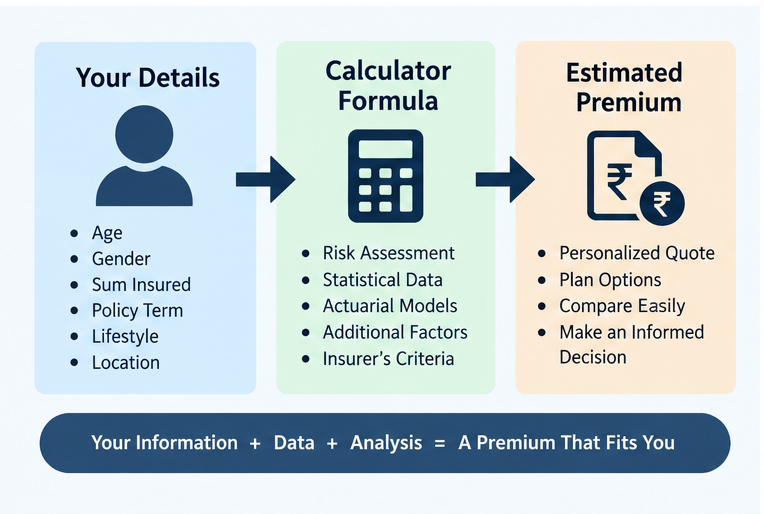
What an Insurance Premium Calculator Actually Does
An insurance premium calculator, whether it lives on an insurer’s site or a comparison platform, takes the details you feed it and spits out an estimated cost. It’s not a binding quote. What it’s really doing is running your inputs through a simplified stand-in for the insurer’s real pricing formula.

The real formula is a lot more complicated. Insurers price risk using actuarial tables — data built from years of claims, mortality and morbidity statistics, and risk modeling that no public web form could fully replicate. So the number you see is an approximation. The actual figure an underwriter arrives at comes only after your full application, any required medical tests, and the paperwork behind it all gets reviewed.

That said, for the simple cases — a healthy non-smoker looking at a standard term plan, say — the calculator’s guess usually lands close enough to what you’ll end up paying.
Why the Numbers Differ Across Insurance Types
Not all calculators are built the same way. A life insurance calculator isn’t running the same logic as a car insurance one, because each is pricing a completely different kind of risk.

Life and term insurance calculators lean heavily on mortality risk. Age, gender, the sum assured, the policy term, and habits like smoking are the main levers. Because life expectancy patterns are fairly stable at a population level, these tend to be some of the more dependable calculators out there — once you’ve been upfront about your health, the math underneath doesn’t shift much.

Health insurance calculators have more moving parts. Age, city, family size, and pre-existing conditions all interact in ways that resist a tidy formula. Two people the same age in the same city can walk away with very different quotes the moment medical history enters the picture — which is why health estimates usually come with a bigger asterisk than life insurance ones.

Motor insurance calculators run on a different logic altogether. They factor in your car’s make and model, its age, engine size, the city you drive in (accident and theft rates vary a lot by location), and your claims history through the No Claim Bonus. Two identical cars can carry very different premiums if one owner has a clean record and the other doesn’t.

Knowing this helps you gauge how much weight to put on any given estimate. A term plan quote for a healthy 30-year-old is probably close to accurate. A health insurance quote for someone with an existing condition is more of a starting point than a real answer.

The Core Factors That Move Your Premium
Across every type of policy, a few inputs tend to swing the final number more than anything else.
- Age — Premiums climb with age almost everywhere, most noticeably in life and health insurance.
- Sum assured or sum insured — More coverage costs more, though it’s not always a straight line; some insurers offer better rates per lakh once you cross certain coverage tiers.
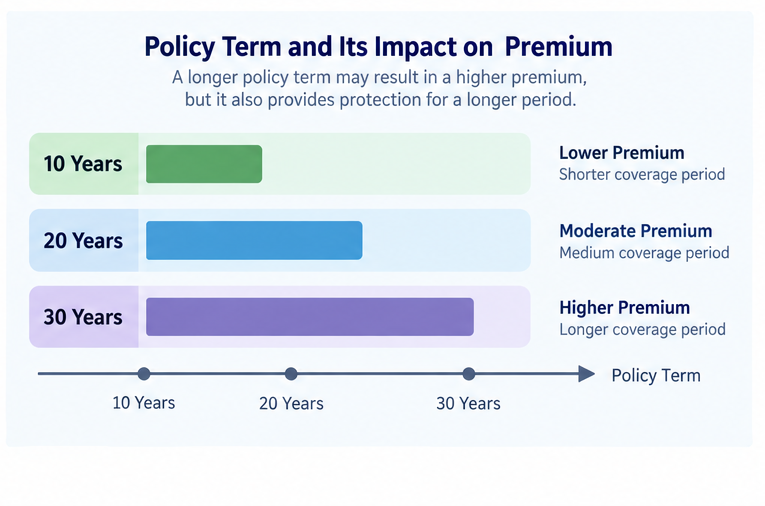
- Policy term — A longer term can change your annual premium, sometimes lowering the yearly number on level-premium products even as the total paid over the policy’s life goes up.
- Health and lifestyle — Smoking, existing conditions, your occupation, even risky hobbies like scuba diving can all push the number higher.
- Location — Health and motor insurance especially price by city, largely because healthcare costs and accident rates differ so much between a metro and a smaller town.
- Gender — Some life insurance products factor this in, tied to differences in average life expectancy.
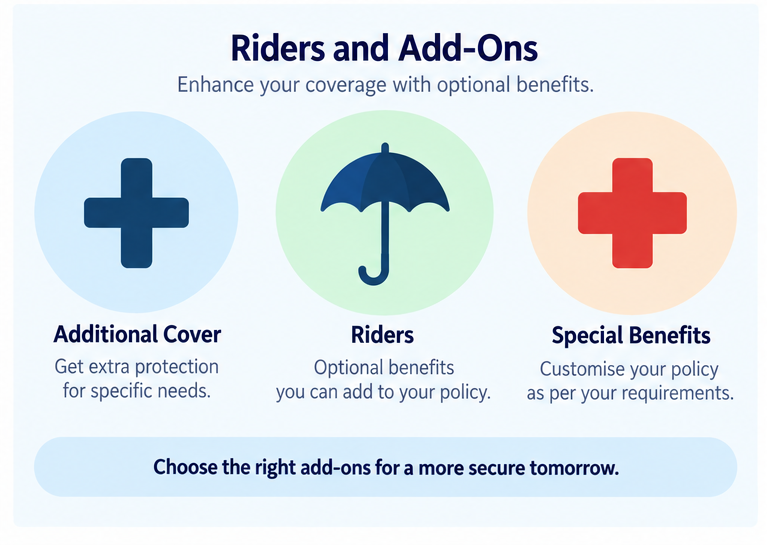
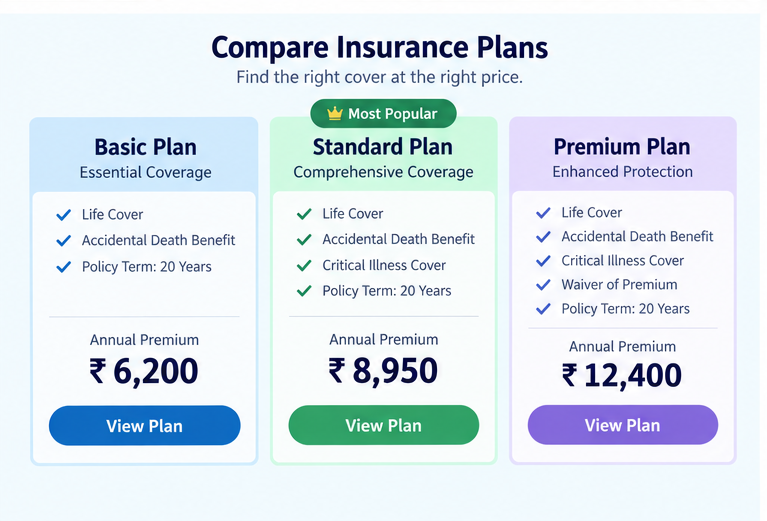
- Add-ons and riders — Extras like critical illness cover or zero-depreciation cover on a car policy sit on top of the base premium.
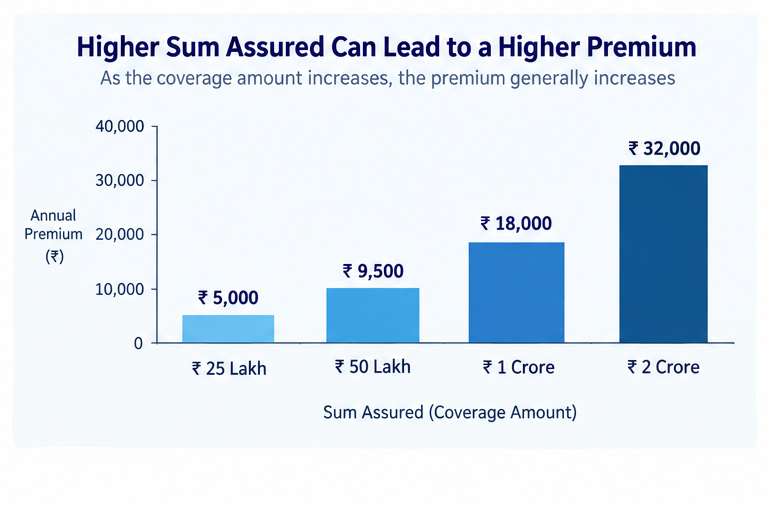
These factors don’t act alone — a calculator blends them through weighted formulas, which is why bumping your sum assured by even 10 lakh can shift the output by more than seems reasonable at first glance.
How to Use a Premium Calculator Without Getting Misled
Most people stop at the first number they see, and that’s really the mistake. Try running the calculator a handful of times with slightly different inputs instead — you’ll get a feel for the range instead of latching onto one figure that may not even be typical.

Before you even open the calculator, work out what you actually need. It’s tempting to shrink the sum assured just to watch the premium drop, but that misses the point — for term insurance especially, think in terms of income replacement and outstanding debts, not a round number that feels comfortable.

Be honest about what you enter. If you smoke occasionally, say so. If there’s a family history of a particular illness, disclose it if asked. Insurers verify all of this during underwriting anyway, and a rosy calculator estimate built on incomplete information just sets you up for a worse surprise later — or, in a worst case, causes problems with an actual claim if the real application doesn’t match what you disclosed upfront.
Check more than one insurer. The same risk profile can price very differently depending on which company’s claims history and business priorities you’re up against. Run identical numbers through two or three insurers, or use a neutral comparison tool, and you’ll often see a real spread worth knowing about.

Treat the output as a planning tool, not a purchase decision. It’s fine for budgeting and comparing options, but don’t finalize a policy purely because one calculator flashed a low number. Read the actual policy wording, look into the insurer’s claim settlement record, and understand the exclusions before you commit to anything.
Common Reasons the Final Premium Doesn’t Match the Estimate
This plays out fairly regularly: someone runs the numbers, applies, and then the actual quote lands a little higher than what they’d planned for. A few things usually explain the gap.

Medical underwriting is the most common culprit. If required tests turn up something the calculator never asked about — elevated cholesterol, high blood pressure — the insurer may apply a loading that raises the premium.

Occupation and income checks can shift things too. Riskier occupations aren’t always represented properly in a basic dropdown menu, so the number can move once your actual profile gets reviewed.
And sometimes it’s simpler than that — the calculator is just running on an outdated rate card that hasn’t caught up with a recent pricing or regulatory change. This is one more reason it’s worth getting a real quote from the insurer or a licensed advisor rather than treating the calculator’s number as final.
Why This Matters More in India Right Now
Insurance penetration in India has lagged behind many other economies for a long time, and a lot of that gap traces back to people simply not understanding how premiums get priced or what real coverage actually costs. Used properly, premium calculators help close that gap — they make pricing more visible and let people compare options before an agent ever gets involved.

IRDAI has also pushed insurers toward clearer, more standardized disclosures over the years, which has made calculator estimates noticeably more reliable than they used to be. Even so, rules and products keep evolving, so it’s worth checking IRDAI’s website directly, or speaking with a qualified advisor, rather than relying on any single article — this one included — for the latest specifics.
A Practical Way to Approach Your Next Calculation
Before you open a calculator at all, spend a few minutes jotting down what problem you’re actually trying to solve. Are you replacing income for your family? Covering a specific medical risk? Insuring a new car? Getting that clear first means you’ll read the output correctly instead of just chasing whatever number looks smallest.
Once you’ve got a few estimates in hand, it’s worth talking to a licensed advisor or the insurer’s own team to validate the figure — especially for larger sums assured or if you have any pre-existing conditions. The calculator gets you most of the way there. The conversation fills in the rest.

